India has World class Technology with regard to Laparoscopic Surgery
Laparoscopic surgical treatment (minimal access surgical treatment) is a surgery carried out within the belly via small incisions associated with dimensions normally 0.5 cm. These surgical procedures use pictures on TV monitors with regard to magnification of medical elements.
Advantages of Laparoscopic Surgery
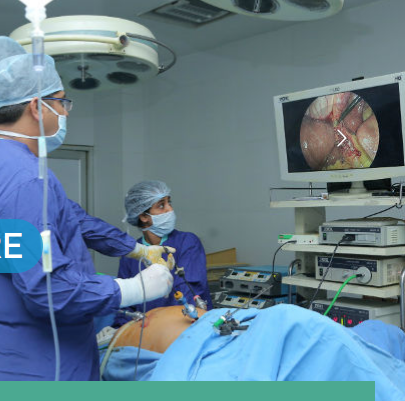
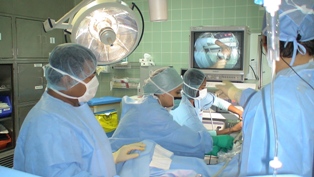
Laparoscopic or “minimal Access Surgery” is a highly specialized technique for performing surgery of abdomen. In the past, this surgical technique was commonly used only for gynaecologic surgery, for diagnostic laparoscopy in cases of infertility and for gall bladder surgery. Over the last 10 years the use of this specialized surgical technique has expanded into intestinal surgery. In traditional “open” surgery the surgeon uses a single incision to enter into the abdomen. Laparoscopic surgery uses several 0.5-1cm incisions. Each incision is called a “port.” At each port a tubular instrument known as a trochar and cannulla is inserted. Specialized instruments and a special telescope known as a laparoscope are passed through the port during the procedure. At the beginning of the procedure, the patient’s abdomen is inflated with carbon dioxide gas to provide a working and viewing space for the laparoscopic surgeon. The laparoscope transmits images from the abdominal cavity to high-resolution video monitors through a digitally advanced camera system in the operating room. During the operation the surgeon watches detailed images of the abdomen on the high resolution monitor. This system allows the surgeon to perform the same operations as traditional surgery but with smaller multiple incisions.However recently single incision laparoscopic surgery is also evolved.
In certain situations a minimal access surgeon may choose to use a special type of port that is large enough to insert a hand known as Hand Port. When a hand port is used the surgical technique is called “hand assisted laparoscopic surgery". The incision required for the hand port is generally 5.5 cm and hence larger than the other laparoscopic incisions, but is usually smaller than the incision required for traditional surgery.
Advantages of laparoscopic surgery?
Compared to traditional open surgery, patients often experience less pain, an earlier recovery, and less scarring with laparoscopic surgery.
Operations which can be performed using laparoscopic surgery?
Most of the abdominal advanced surgeries can be performed using the laparoscopic technique in experienced hand. These include surgery for gallbladder, duodenal perforation, appendicitis, Crohn’s disease, ulcerative colitis, diverticulitis, cancer, rectal prolapse and severe constipation.
In the past there had been concern raised about the safety of laparoscopic surgery for radical cancer operations. But recently several studies involving hundreds of patients have shown that laparoscopic surgery is safe for certain colorectal cancers.
How safe is laparoscopic surgery?
Laparoscopic surgery is as very safe as traditional open surgery. At the beginning of a laparoscopic operation the laparoscope is inserted through a small incision near the umbilicus, Either superior crease or inferior crease of umbilicus. The laparoscopic surgeon initially inspects the abdomen by doing diagnostic laparoscopy to determine whether laparoscopic surgery may be safely performed. If there is a large amount of inflammation or if the surgeon encounters other factors that is risky and prevent a clear view of the structures the surgeon may need to make a larger incision in order to complete the operation safely by converting laparoscopic surgery into open surgery.
Any intestinal or abdominal laparoscopic surgery is associated with certain risks such as complications related anaesthesia and bleeding or infectious complications. The risk of any operation is determined in part by the nature of the specific operation and hidden risk factor within the patient itself. An individual’s general health and other medical conditions are also factors that affect the risk of any operation. Patient should discuss with your surgeon your individual risk for any operation. World Laparoscopy Hospital, Gurgaon is very reach in this concern because for poor and needy patient surgery is completely free at World Laparoscopy Hospital.
Single Incision Laparoscopic Surgery (SILS)
Single incision laparoscopic surgery (SILS) or Single port access (SPA) surgery, also known as laparoscopic endoscopic single-site surgery (LESS), umbilical surgery (OPUS) or single port incision less conventional equipment-utilizing surgery (SPICES) or natural orifice transumbilical surgery (NOTUS), or Embryonic Natural Orifice transumbilical surgery (E-NOTES) is an advanced minimally invasive surgical procedure in which the surgeon operates almost exclusively through a single entry point, typically the patient’s navel. SPA surgical procedures are like many laparoscopic surgeries in that the patient is under general anaesthesia, insufflated and laparoscopic visualization is utilized.The World Laparoscopy Hospital in NCR Delhi is the first hospital in Haryana and only the third in the India to perform a single-port, natural orifice gallbladder surgery through the navel for gallbladder stone disease. During the procedure, surgeons use a single opening in the umbilicus as they manipulate a camera and two laparoscopic instruments to separate the gallbladder from its attachments in the abdomen. The gallbladder is then removed through that same opening. Only a tiny bandage is required to close the navel, and there are no scars.
Single-incision laparoscopic surgery employs the same tools and techniques as conventional laparoscopic surgery and can be used in both men and women. The only difference is a specially-designed port that accommodates the tools.
World Laparoscopy Hospital surgeons have always been leaders in minimally invasive surgery,” says Dr R K Mishra, Director of the World Laparoscopy Hospital and professor of TGO University. “This procedure signals another step forward for our nationally single incision surgery and elevates our efforts to provide the best surgical care while improving patient recovery.”
Dr. Mishra says that single incision laparoscopic surgery should not only for simple surgery like cholecystectomy but should also be used for surgery like donor nephrectomy and for donor who have already decided to give the gift of life and are willing to go through surgery to help a person in need, the possibility of coming through the surgery without scars is a secondary benefit.
Laparoscopic surgery in rural setup
The Indian Chapter of World Association of Laparoscopic Surgeons, a standing committee of the International organization for the promotion of laparoscopic surgery among surgeons and gynaecologists, is attempting to address the needs of rural surgeons through a variety of initiatives, spearheaded by its subcommittee on rural surgery.
Large rural communities generally have at least several general surgeons, a variety of subspecialty surgeons and medical counterparts. Most of the rural setup lack state-of-the-art facilities and equipments for laparoscopic surgery. Small rural communities have also very limited human and technical resources. Surgeons are often solo practitioners with limited subspecialty suport and trained staff. Their scope of practice is broader than that of their urban counterparts, and includes a large volume of patient who need laparoscopy. Surgeons in small rural hospitals are usually very busy practitioners. They are the main target audience fo the efforts of the World association of laparoscopic surgeons advisory council rural srugery liasion group.
The debate over case volumes presents a particular threat to surgeons in small-volume hospitals. The previous generation of surgeons was considered competent as long as they mastered basic surgical techniques and applied them to a large volume of cases in an active practice. With the exception of a few highly specialized techniques, they are permitted, and expected, to perform a wide variety of technically demanding operations. The new paradigm appears to demand that surgeons master atleast few essential minimal access procedures and perform them to the exclusion of all others.
It should come as no surprise that recruitment of yound surgeons to rural pratice is increasingly difficult. Medical students, and reidients have little or no exposure to laparoscopy. Their perception of minimal access surgery is often distroed. What they see suggests surgeons who take lots of call and are permitted to apply relatively few of the skills acquired during a demanding residency. They are commonly encouraged to take a fellowship beyond basic general surgery training, and are overtly or subtly discouraged from considering rural practice. Rural surgeons are old that their urban counterparts, and replacements are lacking. Access to care in small communities will be an ever-increasing problem unless something is done to reverse these trends.
Fortunately, good evidence exists that those surgeons who, despite all odds, decide to forcate in a small town, can still have a rewarding and satisfying professional career. Most patients prefer to have their care locally, provided it is competent. Surgeons keep small hospitals alive, are often leaders in their communities, have busy practices, and enjoy the respect and appreciation of theri friends and neighbors. Rural surgeons are needed. Where demand exists, so does opportunity.
Accordingly, the advisory council of WALS encourages individual surgeons in small towns to maintain high standards, including certifications, record their cases, and participate in peer review activities. As new technology is validated, they should learn it, and introduce it into their practices carefully and ethically. Organized surgery should assist rural surgeons in education, skill maintenance, and acquistion of new technology, preferably in learning centers that are attuned to the special needs of these key practitioners. Collaboration between surgical organizations such as WALS in thes matters will help assure access to high-quality surgical services by rural and other underserved populations.